
Your music could be playing everywhere without you receiving a single euro. Without an IPI code, the system doesn’t know you’re the author, and the money gets lost along the way. In Spain, more than 80% of musicians lose out on income because they don’t manage their rights properly; the IPI is the key to making sure that doesn’t happen to you. Keep reading to learn how to protect what you’ve created and get the recognition you truly deserve.
Your music has a musical ID, and it’s called IPI
Imagine your song playing on Spotify, on a local radio station, or as part of a DJ set by someone you don’t even know. The audience enjoys it, it generates streams, it generates money. But you don’t get a single cent. Not because someone is stealing it from you, but because the rights management system simply doesn’t know that you’re the creator.
This is the silent problem affecting thousands of artists in Spain and around the world. According to industry data, 67% of musicians face obstacles in managing their rights, and 80% lose money due to poor management of those rights. The main reason is a lack of proper registration and identification as authors with the organizations that manage those rights.
The IPI code is your solution. It’s the first step toward breaking free from that statistic and starting to get paid for your work.
What exactly is the IPI code?
The IPI (Interested Party Information) is a unique code that identifies each person or entity with rights to a musical work. Every composer, author, or rights holder receives their own. It functions as your musical ID: it ensures that payments and recognition go to the right person, and not to someone with a similar name.
This code is assigned by organizations such as the SGAE (General Society of Authors and Publishers) when you register as an author or composer. Without this code, collective management organizations cannot track your works or send you the royalties you are entitled to. Your music may be playing all over the world, but the money isn’t finding its way to you.
Why the IPI Is Essential for Your Career
Make sure you receive your royalties. Without an IPI, a collecting society has no way of knowing that the song (and those royalties) belong to you. The money ends up in administrative limbo.
Avoid confusion caused by similar names. The music industry is full of artists with similar names. The IPI sets you apart without a doubt. With that stage name, you’re not “just another one”—you’re you, uniquely and unmistakably.
It uniquely identifies you as the author. Not as “one” of several possible authors, but as the legitimate author of that specific work.
Document your contribution to collaborative projects. If you collaborate with other artists, the IPI makes it clear what share of the royalties each one is entitled to, before the issue even comes up for discussion. Transparency from the start prevents future conflicts.
The IPI doesn’t work alone: other codes that protect your music
The IPI determines who you are. But a musical work needs more than one identifier to navigate the rights system safely:
ISNI (International Standard Name Identifier): identifies content creators worldwide (musicians, authors, and any other creative contributors) in a standardized way across platforms and formats.
ISWC (International Standard Musical Work Code): identifies the work itself on a global scale and ensures that composers and authors receive credit and royalties for its use.
ISRC (International Standard Recording Code): identifies each specific recording and is used for tracking in digital distribution, radio, and royalty collection.
Four codes, one goal: to ensure that your work and your authorship are documented in such a way that no one can cast doubt on them.
How Shamusic Helps You Protect What You’ve Created
At Shamusic, we understand that these identifiers aren’t just bureaucratic paperwork. They’re proof that the music belongs to you. That’s why we’re here to help you:
Protect intellectual property. Each work and its ownership are properly documented and protected, with an immutable hash on the blockchain serving as the technological foundation.
Facilitate collaborations. Con contratos inteligentes, los identificadores permiten repartir derechos entre artistas y productores de forma transparente, sin que nadie tenga que fiarse de la palabra de nadie.
Get your IPI and protect your music now
The next step is simple but crucial: register your work, document your authorship, and make sure that when your music is played, the money knows where to find you.
Don’t let your talent work for free. Don’t let the system ignore your existence as a creator. The IPI is your ticket to entering the professional music scene, gaining recognition, and getting paid what is rightfully yours.
At Shamusic, we’re with you every step of the way. Because protecting your music shouldn’t be complicated—it should come naturally.
Get started today at shamusic.es
.
Frequently Asked Questions
How do I get my IPI code?
The IPI code is assigned by your collective rights management organization—such as the SGAE in Spain—when you register as an author, composer, or rights holder. You must provide your personal information, details about your musical activity, and the works you wish to register. The process may take a few weeks, but once assigned, the code is yours for life.
Are IPI and ISWC the same thing?
No. The IPI identifies the person (author, composer, rights holder), while the ISWC identifies the musical work itself. You need both: one tells who you are, and the other tells what work you created. Together, they ensure that royalties go to the right person for the right song.
Can I receive royalties without an IPI code?
Technically, no. Without an IPI, collective management organizations cannot identify you as a rights holder, so they cannot send you the payments generated by your works. Even if your music is played thousands of times, the money remains unallocated until you register properly.
Does the IPI code protect my music from plagiarism?
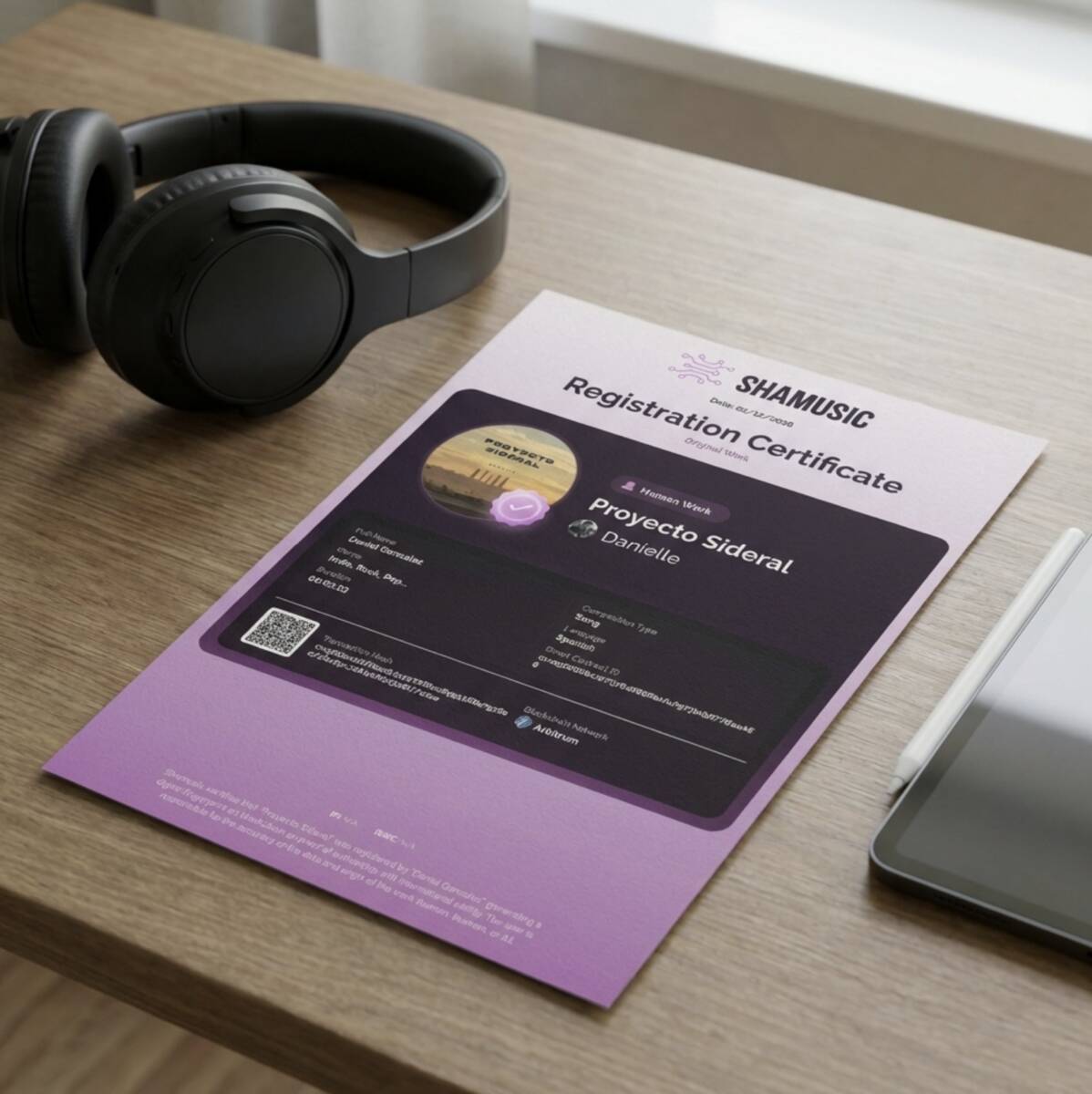
Not directly. The IPI identifies you as the author, but it does not certify authorship itself or the date of creation. For that, you need to register the work with proof of authorship, such as the proof provided by Shamusic through certificates with an immutable blockchain hash, which demonstrate when you created the work and who registered it first.
What happens if I collaborate with other artists and each of us has our own IPI?
Perfect. Each contributor must have their own IPI. When the work is registered, the percentage of rights for each contributor is specified (for example, 50% for composer A, 50% for composer B). That way, when the work generates royalties, each IPI automatically receives its fair share in a transparent manner.