
Music made with AI: Opportunity or threat for independent artists?
The emergence of artificial intelligence (AI) in the music industry has generated intense debate among creators, producers and platforms. Are we facing a creative revolution or a threat to human musicians? In this article we analyze the risks and benefits of AI-generated music, and how platforms such as Shamusic are leading the way towards a responsible, ethical and transparent use of this technology.
What is AI-generated music?
AI music is music created in whole or in part by intelligent algorithms. There are tools capable of generating melodies, lyrics, rhythms and even voices in a matter of seconds. These technologies can be used by both artists and developers to experiment, compose or even automate creative processes.
A threat to independent musicians?
For many emerging artists, the massive presence of AI-generated music represents a threat:
-
Platform saturation: Thousands of songs uploaded per day without human intervention can flood the music market, taking away visibility from original creations.
-
Lack of transparency: Currently, many platforms do not require an indication of whether a song was created with AI, leading to confusion among listeners, curators and industry professionals.
-
Plagiarism and ethics: Some AI systems generate works based on databases of real songs, without guaranteeing that they are not replicating existing ideas.
What if it was an opportunity?
But it’s not all negative. Properly used, AI can become an ally of the independent artist:
-
Creative inspiration: AI tools can help to unlock ideas, propose harmonic structures or give a first impulse to a mock-up.
-
Affordable production: For musicians with limited resources, AI can facilitate the creation of professional beats, arrangements or demos without the need for a large studio.
-
Hybrid collaboration: The fusion of human creativity and automated tools opens up new avenues of artistic expression.
The key is in the label
The problem is not that there is music created with AI. The real risk is in not knowing how to distinguish it. If artificially generated songs are uploaded to platforms without a clear label, they can generate:
-
Music Spam
-
Unfair competition
-
Confusion in the industry
-
Devaluation of creative work
For this reason, transparency is essential.
Shamusic: pioneers in AI music tagging
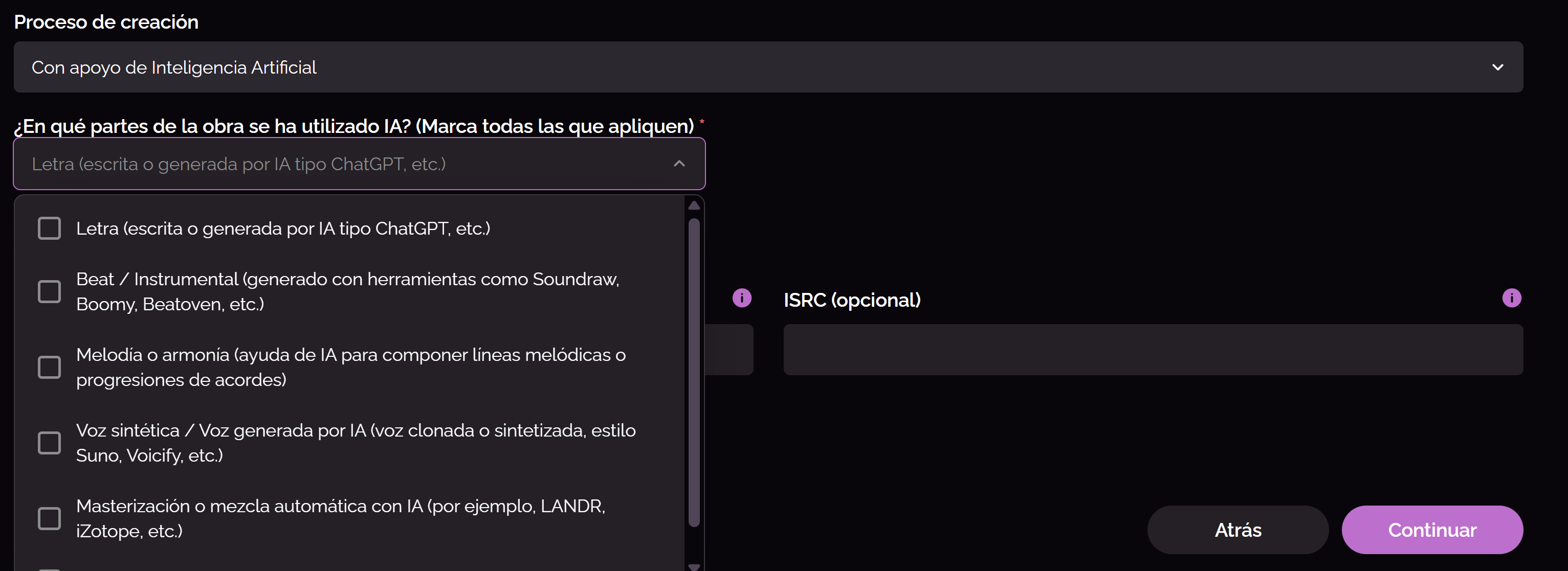
At Shamusic, we believe that the future of music is inclusive, but also ethical and professional. That is why we are implementing an intelligent tagging system, which will allow us to identify whether a song has been generated with artificial intelligence assistance or not.
Each work registered in Shamusic receives a certificate of authorship with blockchain technology, which guarantees its authenticity and date of creation.
Very soon, on the platform, you will be able to filter between:
-
Music created 100% by humans
-
Music created with AI assistance
This will not only protect artists against plagiarism or artificial saturation, but will also allow listeners and professionals to discover music with greater judgment and confidence.
Conclusion: responsibility, not rejection
AI music should not be seen as an enemy, but as a tool that can enhance creativity, provided it is used transparently and fairly. And that is only possible if we all – artists, platforms and listeners – are committed to an ethical, labeled and balanced ecosystem.
Shamusic leads this way with blockchain technology, intelligent filtering tools and a 100% independent and emerging artist-centric approach.
What do you think, would you use AI to create your next song? Would you want platforms to filter this type of content?